Partial Discharge Monitoring
Maximising uptime through actionable insights

Partial discharge (PD) is one of the most significant early indicators of insulation defects in HV assets. Advanced identification of PD is crucial; by detecting these potential breakdowns well before failures occur, asset managers can implement proactive maintenance, ensuring personnel safety and avoiding costly, unplanned outages.
Continuous monitoring informs targeted intervention, helping to extend the operational life of critical HV assets, improving return on investment. This condition-based, predictive approach can also lower maintenance costs compared to traditional time-based strategies. By focusing resources only where needed, companies avoid unnecessary inspections and repairs, making their asset management plan more cost-effective and efficient.
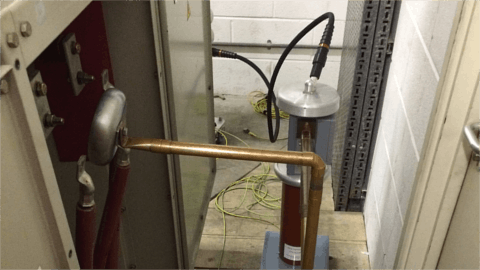
Monitra’s Kronos Monitors attached to PD sensors and data analytics to offer real-time insights into the health of HV equipment. These systems can detect increases in discharge activity, providing asset managers with an understanding of insulation condition. Machine learning algorithms further enhance monitoring by interpreting data patterns, distinguishing normal behaviour from concerning activity, and delivering actionable insights.
While periodic testing identifies issues at a single moment, continuous PD monitoring helps organizations identify long-term degradation patterns. This allows for planned maintenance or other remedial actions to prevent system failures. By doing so, asset lifespan and operational efficiency are improved, while also making better use of maintenance resources.
By combining condition monitoring, machine learning and expert consultation, our solution support the maintenance of consistent, reliable operations.
PD monitoring can detect and trend insulation defects in rotating machines, transformers, cables, switchgear



For further insight into how Monitra can help you keep tabs on the insulation condition of your critical cables, take a look at our library of case studies below.